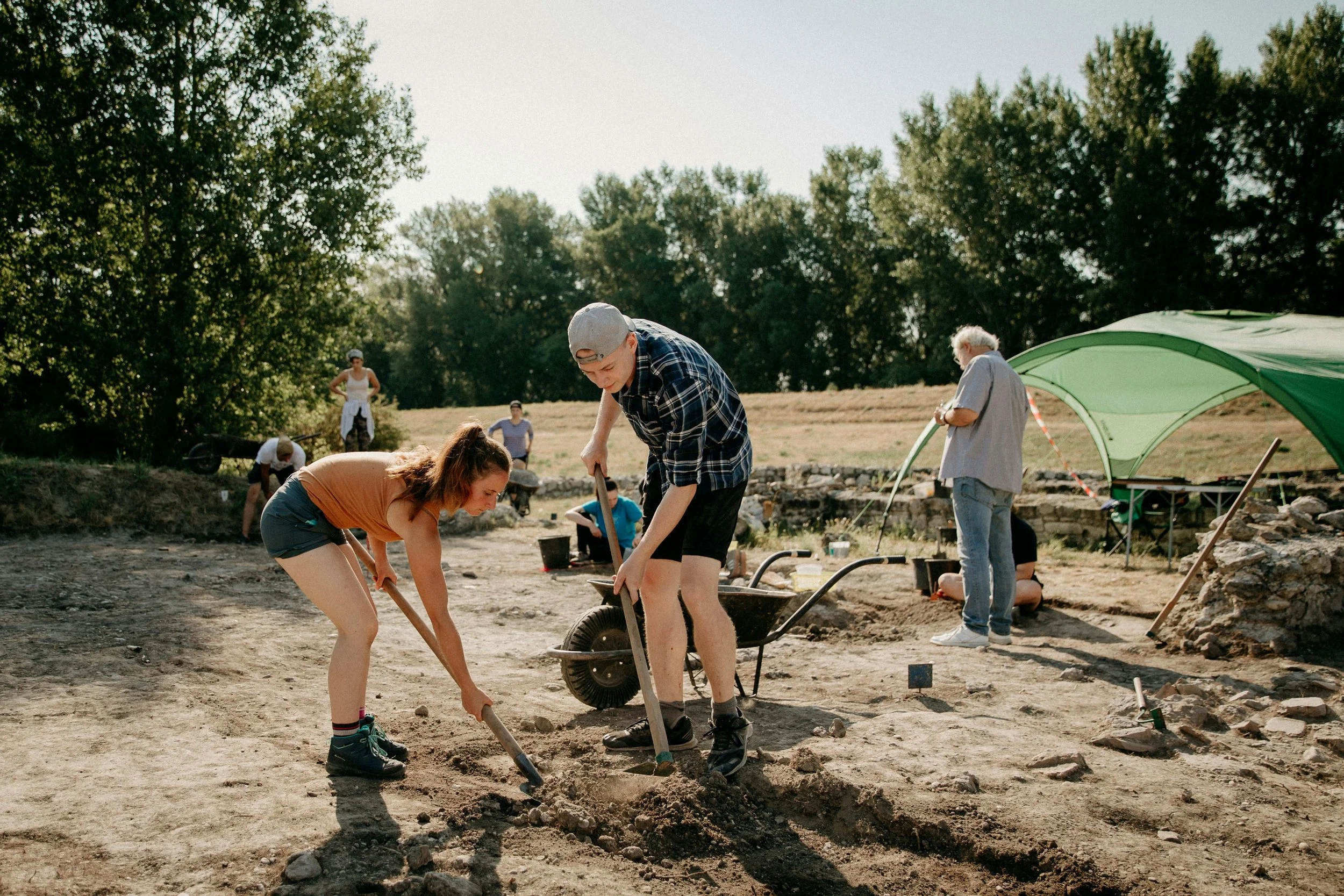
A year's worth of belonging, curiosity, and community.
Everything you need for a year of students who ask better questions, build real partnerships, and leave something behind.
Inside the Complete Ripple System:

✓ Ripple Deck Kit
✓ Four Seasonal Field Guides
✓ Monday-by-Monday Teaching Rhythm
✓ Student Journal
✓ Classroom Slides & Resources
Built by a teacher. Proven in classrooms. Ready for yours.
Some teachers begin with a deck.
Others redesign an entire school year.
Either way, the destination is the same:
School work becomes real work.
Choose your starting point.
UNSURE WHERE TO START?
START WITH THE RIPPLE DECK KIT.
Add the field guides when you’re ready for a full year.
-
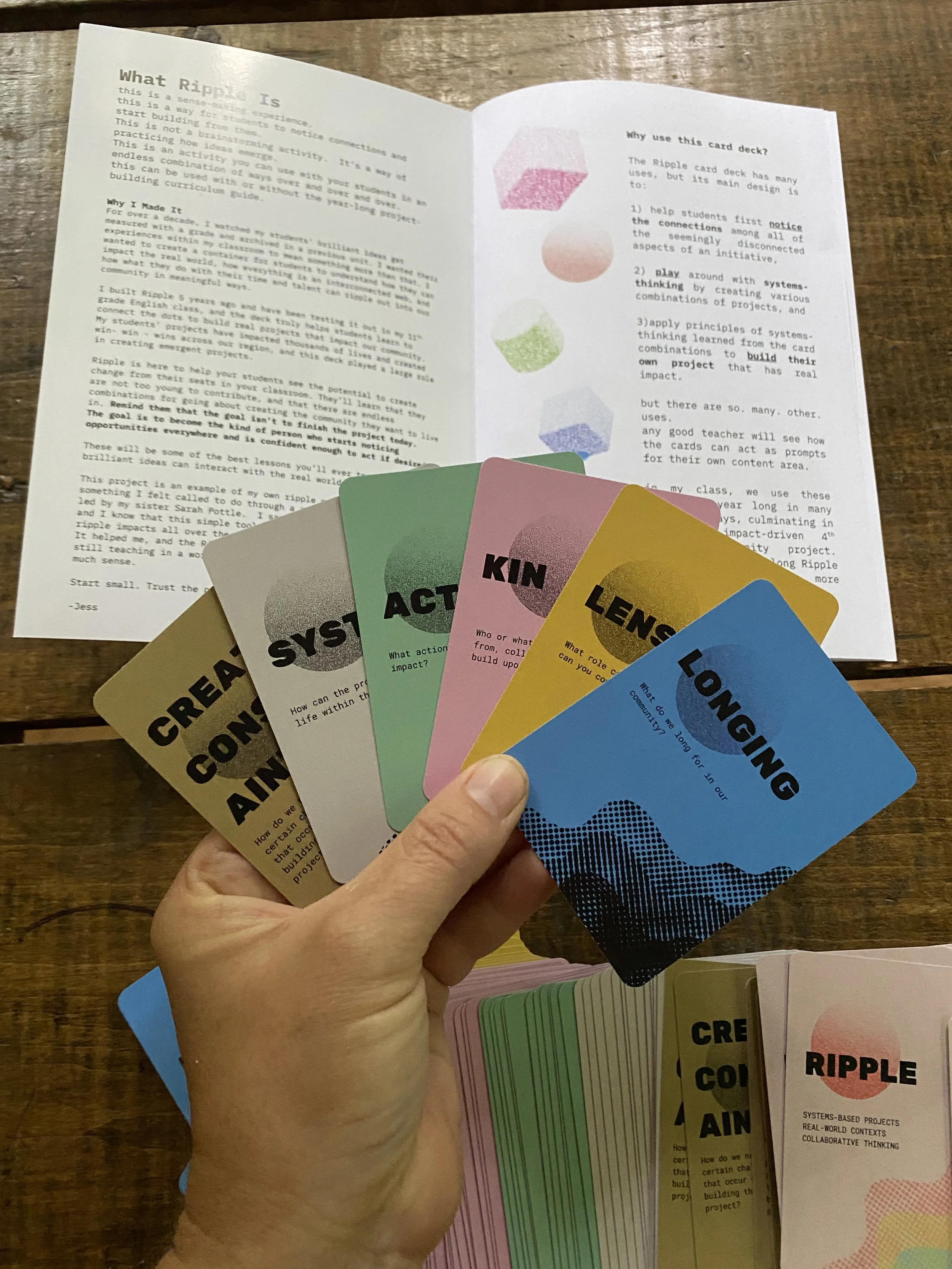
The Ripple Deck — four interconnected card types that help students notice opportunities, uncover community assets, build partnerships, and generate meaningful project ideas.
Quick Start Guide — everything you need to facilitate your very first Ripple experience.
Classroom Slides — ready-to-use visuals that guide students through each activity.
Ripple Zine — stories, inspiration, and practical tips from real classrooms.
Student Handouts - helps facilitate the design build.
Whether you teach English, Biology, Government, Art, or Advisory, etc. the deck is designed to spark conversations that lead to meaningful work.
-
The Deck Kit helps you begin.
The Field Guides help you build a year.
Inside you'll find:
Four seasonal guides (can be used as quarter guides or unit guides) that gradually deepen student work Notice —> Connect —> Follow —> Build
Weekly classroom rhythm and pacing
Student journal activities
Reflection prompts
Project examples
Facilitation tips
Extension ideas
Ready-to-use classroom resources
The Field Guides transform Ripple from a great activity into a year-long project-building experience
-
Ripple was originally designed in a high school English classroom, but it now supports teachers across disciplines.
Great for:
English Language Arts
Science
Social Studies
Government
Art & Design
Advisory
Interdisciplinary learning
Recommended for grades 7–12, college, and adult learning.
You can use Ripple as:
a single lesson
a short inquiry
a semester-long project
or the rhythm for an entire school year.
No prior project-based learning experience is required.
-
Students sit in groups of four.
Each group begins with six cards.
They start by sharing something they care about in their community.
As the cards circulate, unexpected connections begin to emerge between students' interests, local people, places, and possibilities.
By the end of one class period, every group has the beginnings of several authentic project ideas.
No worksheets. No predetermined outcomes. Just structured curiosity.
A superintendent's approval: “This project has provided a valuable, rewarding, and real-world learning opportunity for students. Initiatives that have originated from this project have had a significant impact on the school and provide an authentic and engaging experience for the students. As a principal, I had the opportunity to interact with many students on their projects and their passion and enthusiasm to create meaningful change in their school and community was inspiring!”
Dr. Paul Lucas
STUDENt APPRoved:Parent Approved:
Ripple is an exceptional program that takes students out of the comfort of the classroom and into their community in pursuit of a meaningful project. It provides a platform for students to really dig in – to research options, explore possibilities, and determine solutions. Through the process, students also learn how to consult and communicate with adults (and with their peers) – an aspect of the program that I really love. I appreciate how Ripple prompts students to consider their connection with their community and to find ways to make a difference.
I witnessed the success of this program both as a parent and stakeholder. Because students identified a need within the community, the school district is now reassessing their choice of food sourcing and offerings in an effort to provide healthier options for the entire student body. And a thriving native pollinator garden now resides by the local library in a space that was once a sterile, heavily-mulched flower bed.
-Bitty C.
when students were asked which unit of the year they found most valuable and why:
“I think the Ripple project was the most valuable because it combined every aspect that is found in a successful school year, with easy-to-understand instructions and many possibilities for success. “
“The thing I found most valuable overall was the Ripple project. Despite there often being some delays and confusion about the next steps in terms of what I should do personally, I feel like when it comes together, and you get your idea rolling, being able to produce something that you are passionate truly is an excellent idea. “
“I would like to clarify that all the novel units were very interesting but it’s not like they were a new experience like the Ripple project which forced me to operate in an entirely new way.”
“To me, doing the Ripple Research Project was very valuable as I was able to get started early on my Gold Award Project for Girl Scouts. I think if it weren't for the Edshed Project I wouldn't have gotten so far into my project.”
“I found the Ripple project the most valuable because it help us shift from doing things for a grade to actually being passionate about an assignment to do in class and it gave us the freedom to explore.”
“The Ripple Project. This project was super unique to any English class I’ve ever been in. It encouraged me to my community and it produced a ton of awesome projects, like Nash’s documentary and Andrew’s fitness program. In no other class have I had to actually go out of my way to do good for the people around me, so that is why this project was the best.”
“I think the Ripple project was the most valuable because it combined every aspect that is found in a successful school year, with easy-to-understand instructions and many possibilities for success. “
FAQs-
Ripple was built in a real classroom, not a corporate curriculum office building, and the creator is still teaching - in her 20th year! The first time it was used, a student earned a full ride to university because of the project they built, among many other win win wins. It's still being used and refined in that same classroom today.
-
Yes — email us for department and bulk school pricing. This is especially helpful for school wide initiatives such as an “advisory” or “homeroom” weekly period.
We can also send along a Purchase Order form.
-
Like everything you use, always preview first. However, because the card deck itself is a repeatable, hands-on group activity that can take anywhere from 10 minutes to 50 minutes, you can feel confident unpacking, reviewing the materials, opening up the student-facing slideshow to modify if you’d like, and using tomorrow!
If you choose to follow the year-long track with the 4 field guides, there’s specific activities for you to use every Monday, building a project the whole year.
That being said, you can facilitate your first Ripple experience as early as you get the deck.
Most teachers begin with a single class period using the deck to help students notice the people, places, stories, and opportunities already surrounding them.
Some teachers use Ripple as:
a one-day experience
a two-week project
a semester-long inquiry
the foundation for an entire school year
You decide how far to take it.
-
Ripple was originally designed in a high school English classroom, but it has since been used in:
English Language Arts
Environmental Science
Social Studies
Government
Art & Design
Engineering
Advisory
Service Learning
College courses
Community organizations
Because Ripple begins with students—not content—it adapts to almost any discipline where curiosity and community matter.
(Recommended for grades 7–12+, college, and adult learning.)